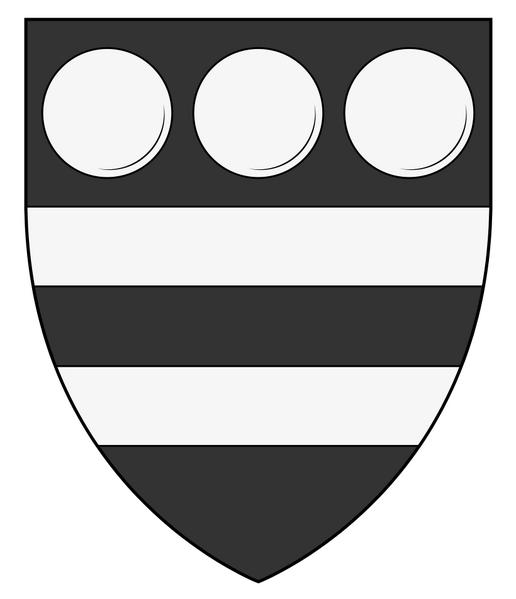
Arms: Sable, two bars Argent, in chief three plates.
Plain English: A black shield with two silver horizontal bars and three silver discs across the top.
The family
The Hungerfords were one of the leading landowning families of late-medieval Wiltshire and Somerset, with important estates at Heytesbury in Wiltshire and Farleigh Hungerford in Somerset.
Sir Walter Hungerford (1378–1449), soldier, royal servant and Speaker of the House of Commons, fought at Agincourt and was created Baron Hungerford in 1426. His descendants remained prominent during the period of the St Thomas’s ceiling, although Robert Hungerford, 3rd Baron, supported the Lancastrian cause during the Wars of the Roses and was executed in 1464.
The arms
The Hungerford arms are Sable, two bars Argent, in chief three plates: two silver horizontal bars on a black field, with three silver roundels, known heraldically as plates, above.
The coat came to the Hungerfords from the FitzJohn family through marriage and became firmly associated with Hungerford. The family also made extensive use of the sickle as a heraldic badge.
Salisbury and Wiltshire
The Hungerfords had particularly strong connections with Salisbury. Walter, 1st Baron Hungerford, founded a chantry in Salisbury Cathedral, where he and his wife Katherine Peverell were buried. Hungerford heraldry and monuments remain in the Cathedral.
At St Thomas’s, the connection is even closer. The area now known as the People’s Vestry was built by members of the Godmanstone and Hungerford families and was historically associated with the Hungerfords.
On the St Thomas’s ceiling
The Hungerford arms appear in two places:
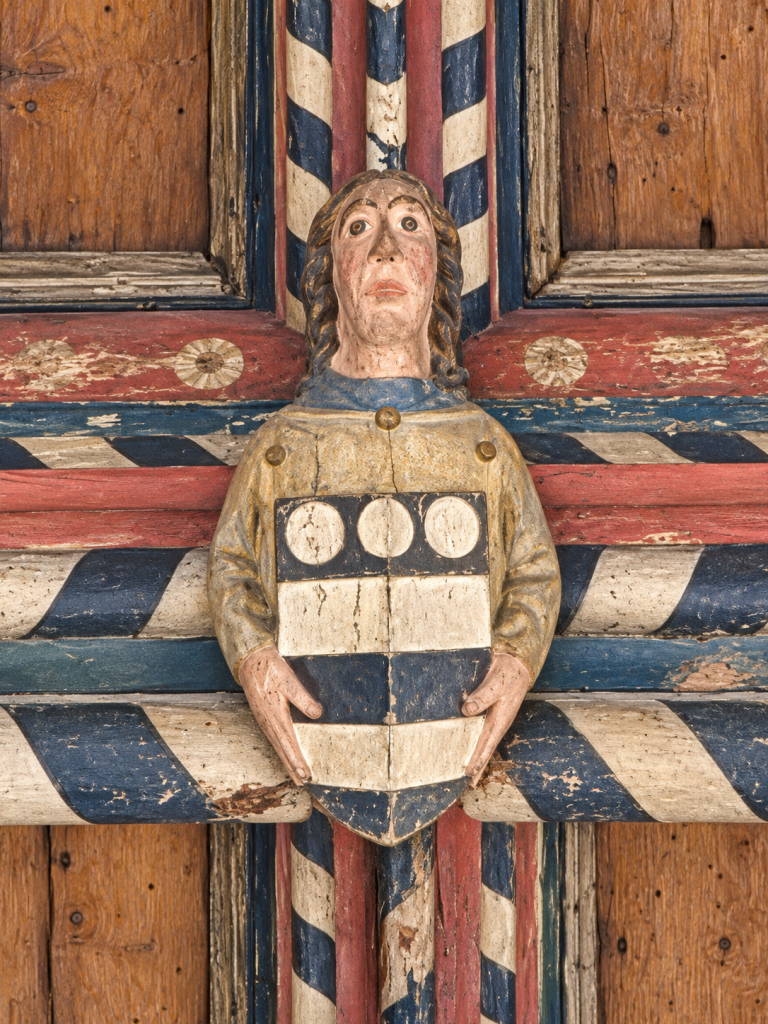
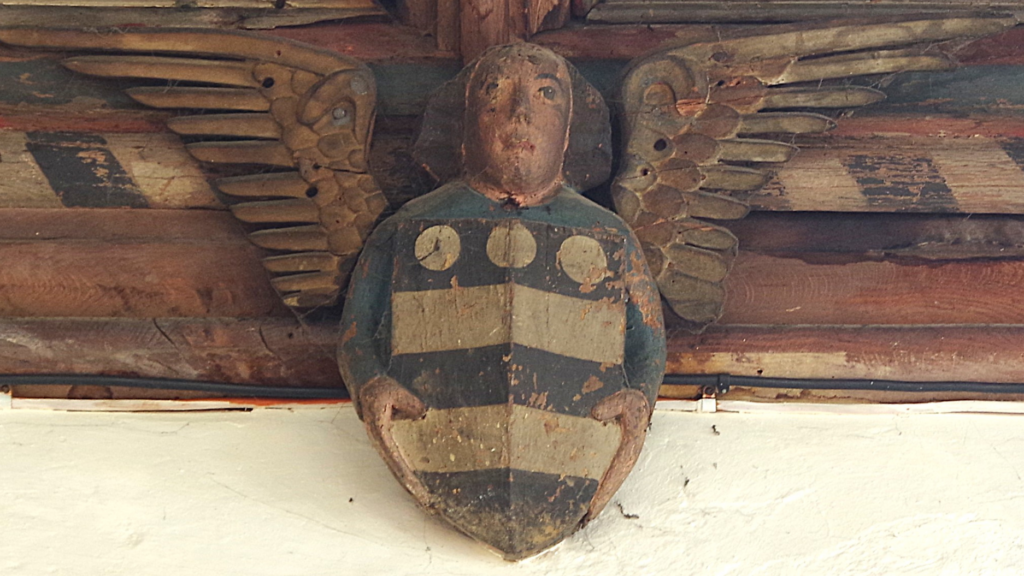
The occurrence at PV3-W, within the present People’s Vestry, is particularly appropriate given the family’s association with this part of the church.
Sources
St Thomas’s Salisbury — church guide.
The Hungerford Cartulary, ed. J. L. Kirby.
Salisbury Cathedral — Hungerford monuments and heraldry.